When choosing a commercial HVAC system, upfront price often gets the most attention. Equipment prices and installation figures are easy to compare, and budgets are often set around those numbers alone.
However, the purchase price represents only a fraction of what a system will cost over its working life. Energy use, maintenance, repairs, and replacement typically outweigh the initial investment.
Lifecycle cost looks at the total cost of ownership of a commercial HVAC system from installation to end of life. Understanding it allows better technical decisions, more accurate budgeting, and fewer long-term problems.

Lifecycle cost refers to the total cost of owning and operating an HVAC system over its entire life. It goes beyond the initial purchase, capturing all the factors that influence long-term expense and performance.
Key elements of lifecycle cost include:
Considering all of these aspects gives you a complete picture of the system’s true value, helping you choose solutions that are efficient, reliable, and cost-effective over the long term.
Capital cost includes the supply and installation of the HVAC system and all associated components.
Factors affecting capital cost include:
Incorrect system selection or poor design can increase both capital and operational costs. Oversized systems are particularly inefficient, leading to higher energy use and reduced equipment life.
Invest time in accurate load calculations and system design to avoid oversizing and unnecessary capital spend.
Energy use is usually the largest single contributor to lifecycle cost.
In many commercial buildings, HVAC systems account for a significant proportion of total energy consumption. The efficiency of the system therefore has a direct impact on operating costs.
Energy consumption is influenced by:
Higher-efficiency equipment typically carries a higher capital cost, but reduced energy consumption can offset this over time.
Prioritise part-load efficiency and effective controls, as these have the greatest impact on real-world energy performance.
Planned maintenance is essential to maintain system performance, efficiency, and safety.
Typical maintenance activities include:
Maintenance costs vary depending on system complexity, accessibility, and operating hours. Systems with poor access or specialist components may incur higher ongoing costs.
However, regular maintenance helps prevent premature failures and prolongs system life. So ensure requirements and access needs are considered at design stage, not after installation.
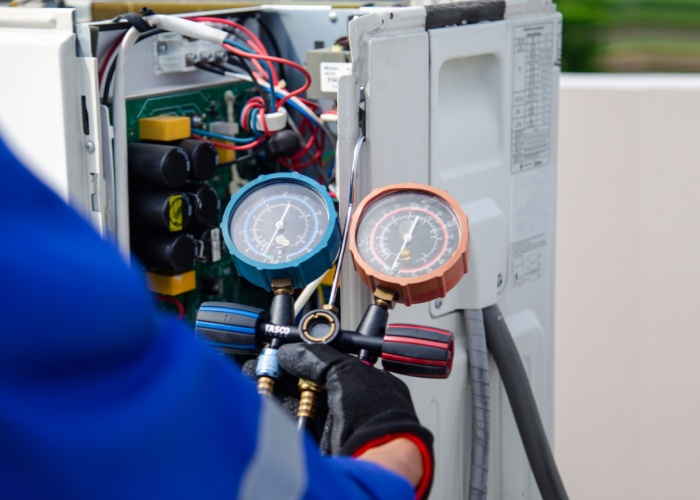
Unplanned repairs are an important component of lifecycle cost.
As HVAC systems age, components such as compressors, fans, valves, and sensors are more likely to fail. Emergency repairs are often more expensive than planned work and may require system downtime.
The consequences of failure can include:
Build contingency into lifecycle budgets and reduce risk through preventative maintenance rather than reactive repairs.
Most commercial HVAC systems are designed to operate for 15 to 25 years, although this varies by system type and usage.
Factors affecting lifespan include:
Operating a system beyond its effective lifespan often leads to increased energy consumption and higher repair costs.
Lifecycle cost planning allows replacement to be anticipated and budgeted rather than reactive.
Control systems have a significant influence on lifecycle cost.
Effective controls allow HVAC systems to operate only when required and at appropriate output levels. Poorly configured or outdated controls can lead to excessive run hours, inefficient operation, and unnecessary wear.
Modern control systems can provide:
The cost of improved controls is often recovered through reduced energy use and improved reliability. So treat controls and commissioning as essential components, not optional extras.
Different HVAC system types have different lifecycle cost profiles. For example:
No system type is universally suitable. Lifecycle cost analysis allows system options to be compared based on total long-term cost rather than initial price.
Commercial HVAC systems are long-term assets, with costs realised over decades rather than at installation.
Focusing only on capital cost increases the risk of higher energy bills, frequent breakdowns, and premature replacement. Lifecycle cost planning provides a more accurate measure of value, reliability, and performance.
At Loughborough Air Conditioning, we take a lifecycle-led approach to system design, installation, and maintenance.
By considering long-term performance from the outset, we help reduce operating costs, extend system life, and protect your investment across the full lifespan of your HVAC system.